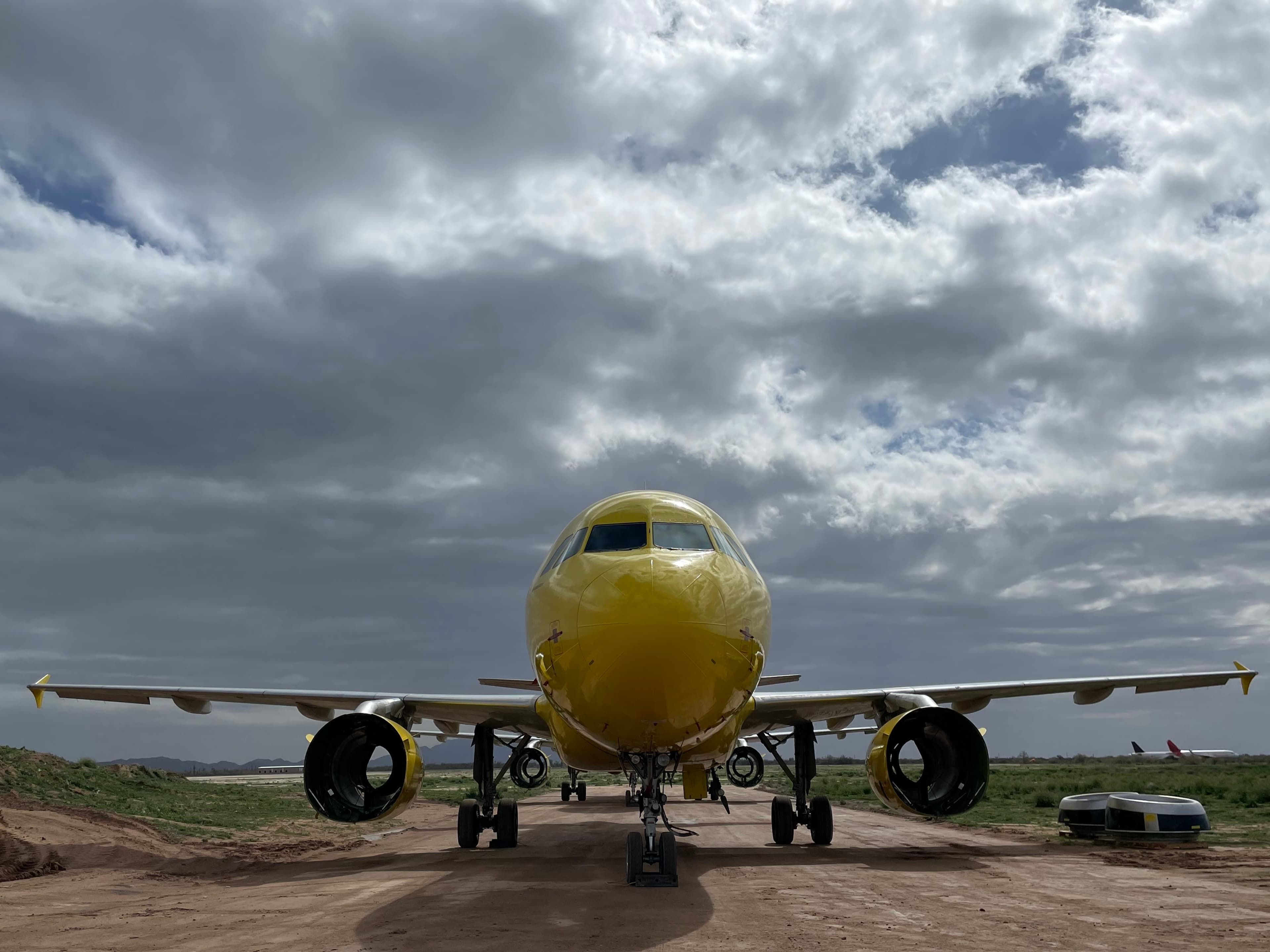
Photo via CNBC Business
Spirit Airlines has enlisted a specialized team of pilots to manage the relocation of its signature yellow aircraft to desert storage facilities, according to CNBC Business. This operational move reflects broader industry trends as carriers adjust capacity and fleet positioning in response to market conditions. The effort underscores the logistical complexity involved in managing large commercial fleets during periods of transition.
The use of dedicated ferry pilots for aircraft repositioning is a standard practice in the aviation industry, though it highlights the specialized expertise required to manage such operations. These pilots undergo specific training to handle ferry flights, which differ significantly from commercial passenger operations. For Dallas-area aviation professionals and industry stakeholders, such moves often signal strategic decisions that can ripple through regional hubs and employment markets.
Desert storage facilities, typically located in Arizona and Nevada, serve as cost-effective long-term parking solutions for airlines adjusting their fleets. Spirit's decision to move aircraft to these facilities may indicate a reassessment of route priorities or capacity management as the airline navigates competitive pressures and changing travel demand patterns. The timing and scope of such repositioning efforts can provide insight into carrier confidence and market outlook.
For Dallas business readers tracking airline industry developments, Spirit's fleet movements represent the kind of behind-the-scenes operational decisions that affect market competition, employment, and regional economic activity. Whether this transition signals expansion plans, consolidation, or strategic repositioning remains to be seen, but it demonstrates the dynamic nature of commercial aviation and the constant operational adjustments required to remain competitive in the sector.