Photo via Fast Company
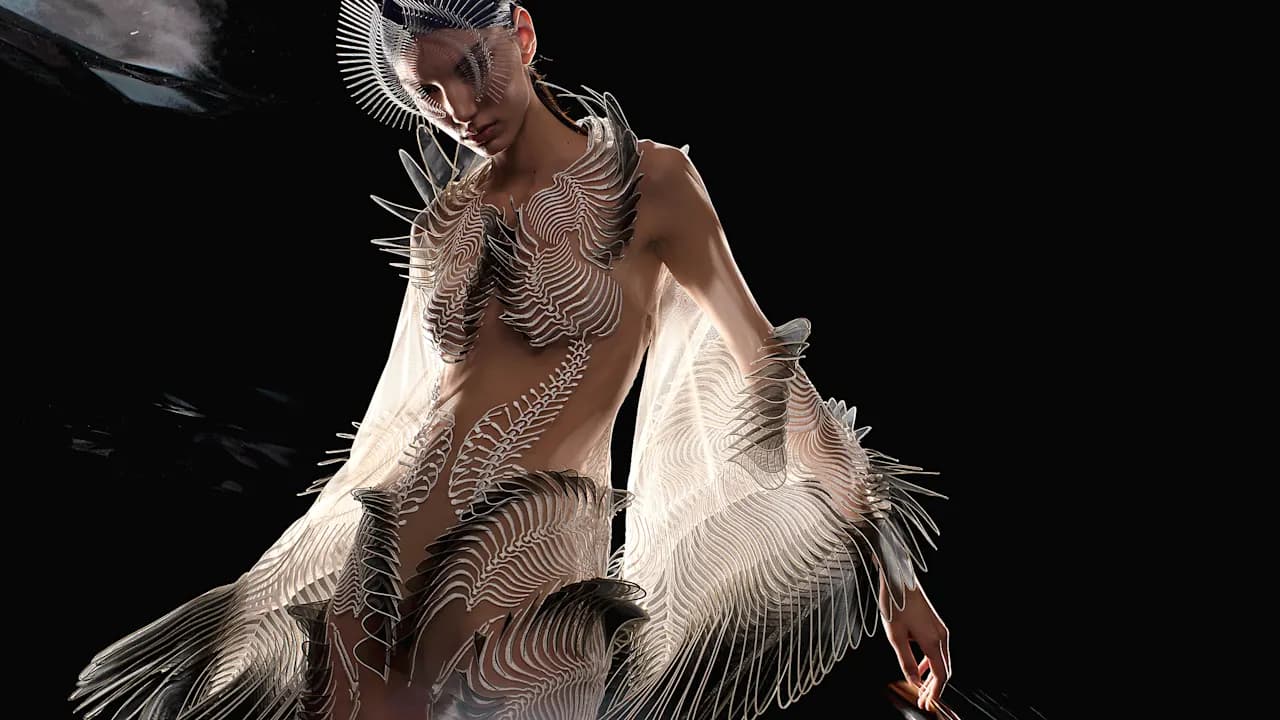
Dutch fashion designer Iris van Herpen is redefining what luxury couture means in an era dominated by fast-fashion cycles and AI-generated designs. Her retrospective, "Sculpting the Senses," which opens at the Brooklyn Museum on May 16, showcases two decades of work that treats scientific collaboration as a core creative tool. From a bubble dress containing 15,000 hand-formed glass pieces to garments inspired by dinosaur fossils and coral systems, van Herpen's pieces challenge the notion that fashion must choose between artistry and innovation.
What makes van Herpen's approach particularly relevant to business leaders is her explicit rejection of speed-driven production models. According to the Brooklyn Museum's senior curator Matthew Yokobosky, van Herpen focuses exclusively on couture—custom, handmade pieces created in collaboration with scientists, architects, and biologists. This stands in sharp contrast to the 92-100 million tons of textile waste generated annually by the apparel industry. Her experiments with recycled ocean plastic, 3D-printed materials, and even living organisms seeded with bioluminescent algae offer a blueprint for sustainable luxury production.
The exhibition also highlights the business case for slow fashion and craftsmanship. Van Herpen's creations—including one dress that required 2,550 hours of labor—command premium prices and museum-level recognition. A new video installation projects the detailed handiwork of her atelier onto massive screens, showing the meditative, labor-intensive process behind each piece. For Dallas-area luxury brands and design firms, this model demonstrates that scarcity, quality, and innovation can create significant value without relying on mass production.
As the fashion industry grapples with sustainability demands and consumer skepticism toward fast-fashion giants, van Herpen's work offers an alternative paradigm: treating the human body as something worthy of scientific study and artistic investment. The Brooklyn show, which runs through December 6, represents a significant moment for design entrepreneurship—proving that couture crafted through interdisciplinary collaboration can thrive in a market increasingly skeptical of throwaway fashion.