Photo via Fast Company
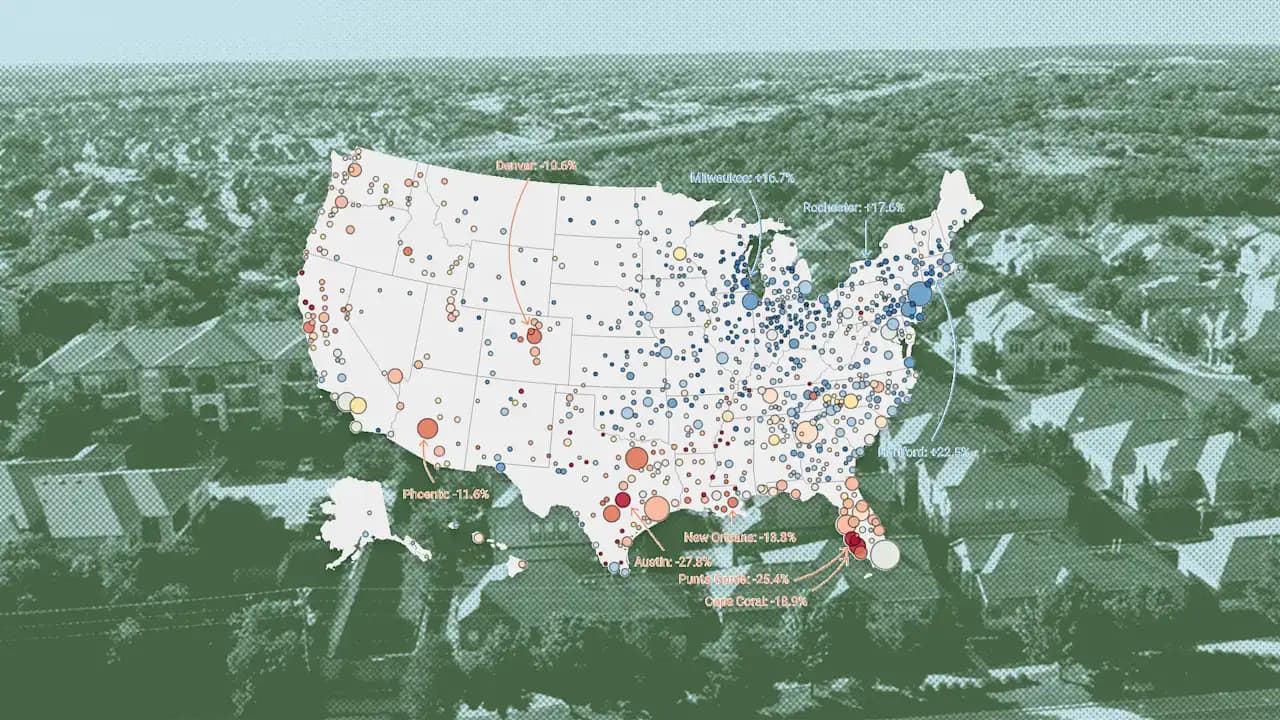
The Dallas-Fort Worth housing market has experienced a 10.1% decline from its 2022 peak, placing it among the nation's 15 largest metropolitan areas undergoing significant home price correction, according to analysis by ResiClub. This pullback reflects a broader recalibration across Sunbelt markets that saw explosive pandemic-era growth. While the national housing market has stabilized with prices up just 2.2% since June 2022, several regions—including three Texas metros—have moved into corrective territory as mortgage rate increases and shifting migration patterns reset expectations.
Austin leads the Texas markets in price correction at 27.8% below its 2022 peak, followed by San Antonio at 11.2%. These declines are particularly significant given that Austin experienced a stunning 73% price surge during the pandemic boom, among the highest nationally. The overheating was driven by remote work migration, stimulus spending, and historic inventory shortages. As that migration wave subsided and builders flooded the market with new supply, prices began their descent, creating both challenges and opportunities for North Texas stakeholders.
The DFW market's 10.1% correction appears less severe than Austin's, suggesting that the region's larger, more diversified economy may have weathered the pandemic boom's excesses somewhat better. According to the analysis, markets that experienced the greatest 'overvaluation' in early 2022 have seen the most substantial price declines. Moody's Analytics data shows a meaningful correlation between Q2 2022 overvaluation scores and subsequent price movements, indicating that markets are now pricing in fundamentals more aligned with local income levels. This recalibration, while uncomfortable for recent homebuyers, may reduce long-term downside risk.
For Dallas-area business leaders and real estate investors, the current environment presents a transition point. Builder incentives and new construction pricing adjustments are creating ripple effects through the resale market, while inventory levels remain tighter than in pandemic boomtowns like Austin. As overvaluation metrics decline and prices stabilize closer to income fundamentals, the risk profile of North Texas real estate may be quietly improving—suggesting that the worst of the correction could be behind us.