Photo via Fast Company
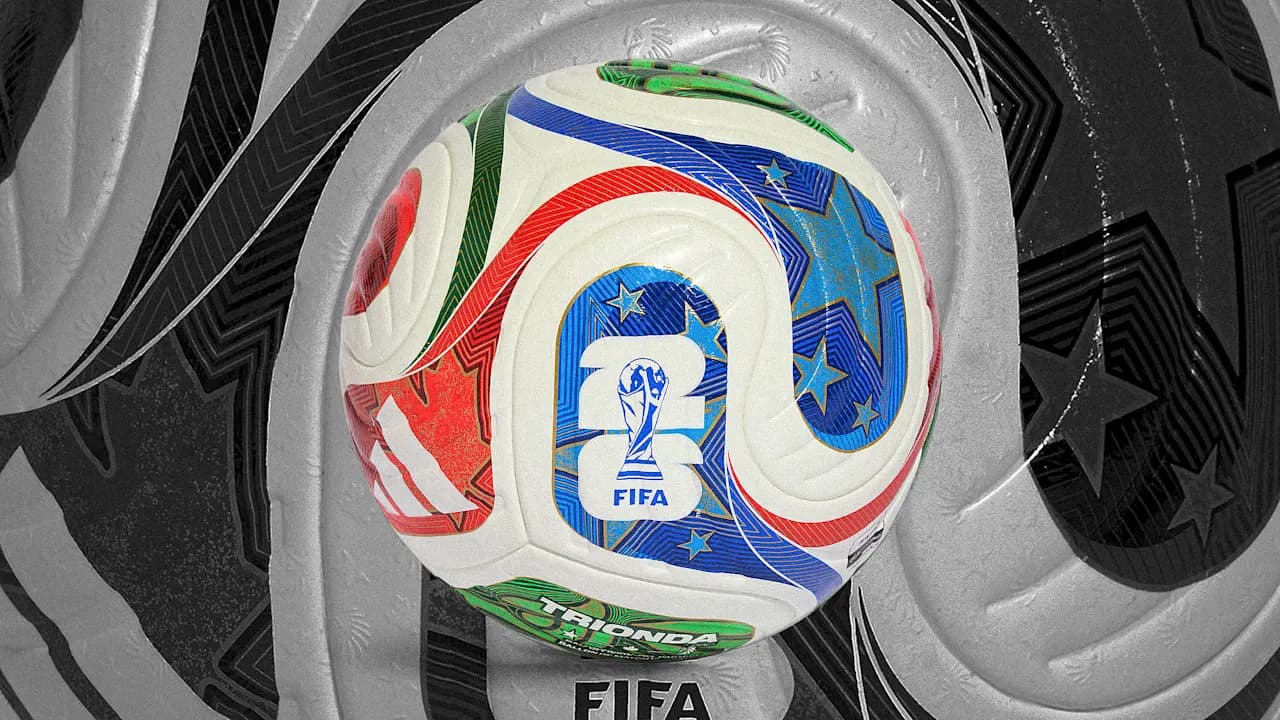
Every four years, Adidas redesigns the official World Cup soccer ball, forcing players and teams worldwide to adapt to new aerodynamic properties. For 2026, the company has unveiled the Trionda, a groundbreaking design featuring just four panels—the fewest in men's World Cup history. This minimal-panel approach represents a significant engineering challenge, as designers must balance surface smoothness with controlled flight dynamics to avoid the unpredictable behavior that plagued earlier iterations.
The Trionda's design prioritizes stability through intentionally deep seams, pronounced grooves on each panel, and fine surface texturing—a direct response to lessons learned from the notorious 2010 Jabulani ball, which became infamous for erratic dips and swerves that frustrated goalkeepers. According to engineering tests conducted at the University of Tsukuba, the Trionda reaches its aerodynamic drag crisis at approximately 27 mph, lower than previous models, providing more consistent behavior during corner kicks and free kicks. However, the trade-off is a slight reduction in range on hard-hit long balls, with players potentially seeing kicks come up a few meters short.
Beyond aerodynamics, the Trionda incorporates advanced 'connected-ball technology' that enhances officiating accuracy. Unlike previous designs where sensors were centered within the ball, Trionda's measurement unit sits within a specially designed panel layer, with counterbalancing weights distributed across the other three panels. This innovation feeds real-time data to video assistant referee systems and semi-automated offside technology, ensuring consistent decision-making across tournament matches.
For U.S.-based soccer organizations, equipment manufacturers, and sports technology companies, the Trionda's debut represents both a competitive opportunity and a logistical challenge. Teams and players will need to adjust training protocols and tactical approaches based on the ball's revised flight characteristics, while domestic sporting goods suppliers may see increased demand for equipment calibrated to the new specifications. The 2026 tournament, hosted across Canada, Mexico, and the United States, positions North American sports enterprises at the center of global soccer's technological evolution.