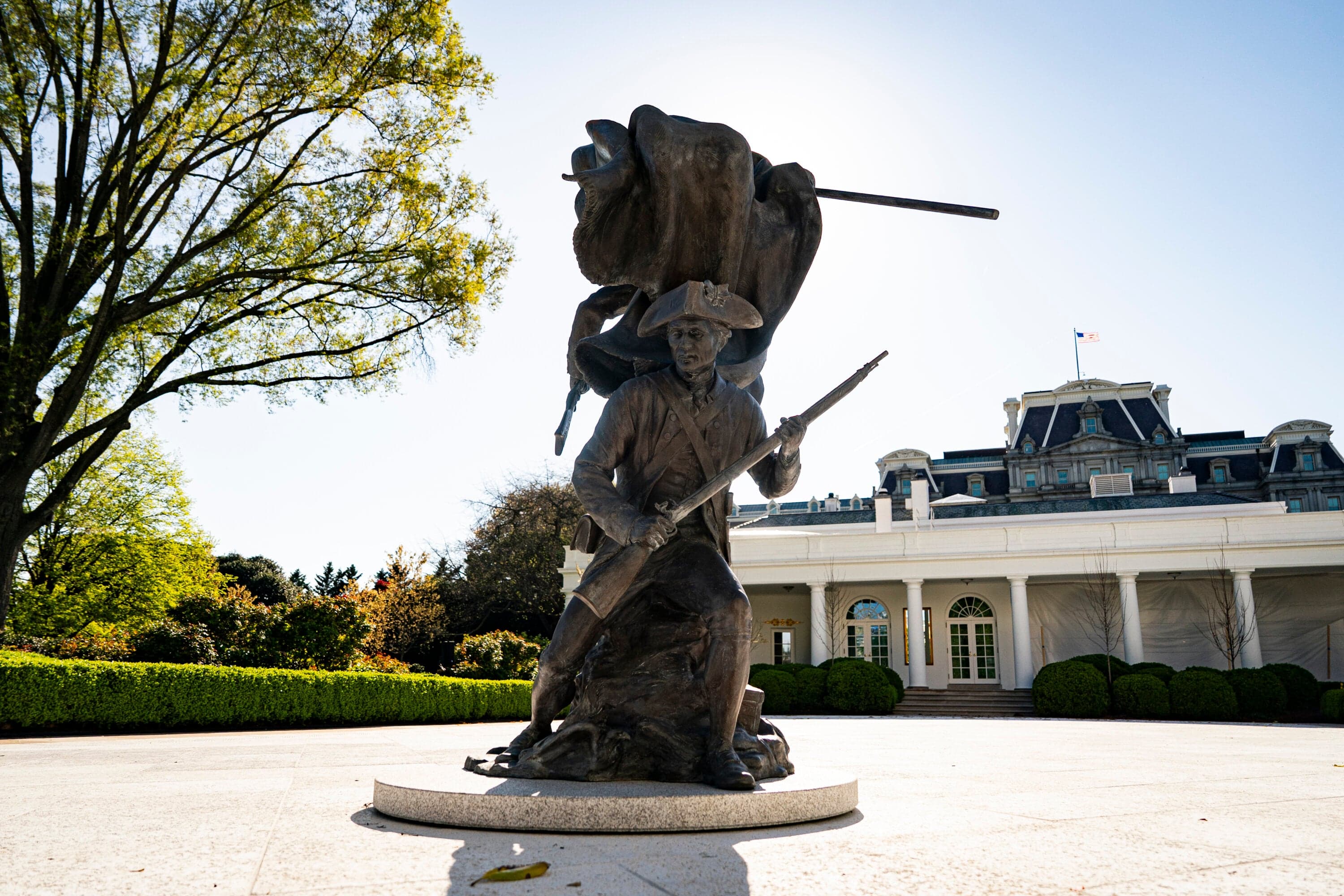
Photo via Washingtonian - The Website That Washington Lives
According to Washingtonian, the White House Rose Garden has undergone a significant transformation over the past year, moving away from its traditional horticultural focus toward displaying statuary. The garden now features five bronze sculptures commemorating historical figures including Benjamin Franklin, George Washington, Alexander Hamilton, and Thomas Jefferson, along with representations of Revolutionary War soldiers. This shift represents a deliberate curatorial choice about how to present American history and civic values at one of the nation's most visible addresses.
The project, framed as part of an initiative to 'beautify' the White House grounds, raises questions relevant to Dallas institutions and civic leaders about the competing interests in public space design. Many cities and organizations face similar decisions about how to honor history, accommodate public use, and maintain original designs. For Dallas business and real estate professionals, this serves as a case study in how institutional leaders navigate stakeholder expectations when redesigning prominent spaces.
The Rose Garden's evolution underscores how aesthetics and symbolism intersect in high-profile settings. Whether viewed as preservation or transformation, such decisions carry implications for how organizations communicate identity and values. Dallas-area leaders managing significant properties or public spaces might reflect on how their own design choices signal institutional priorities and resonate with stakeholders.