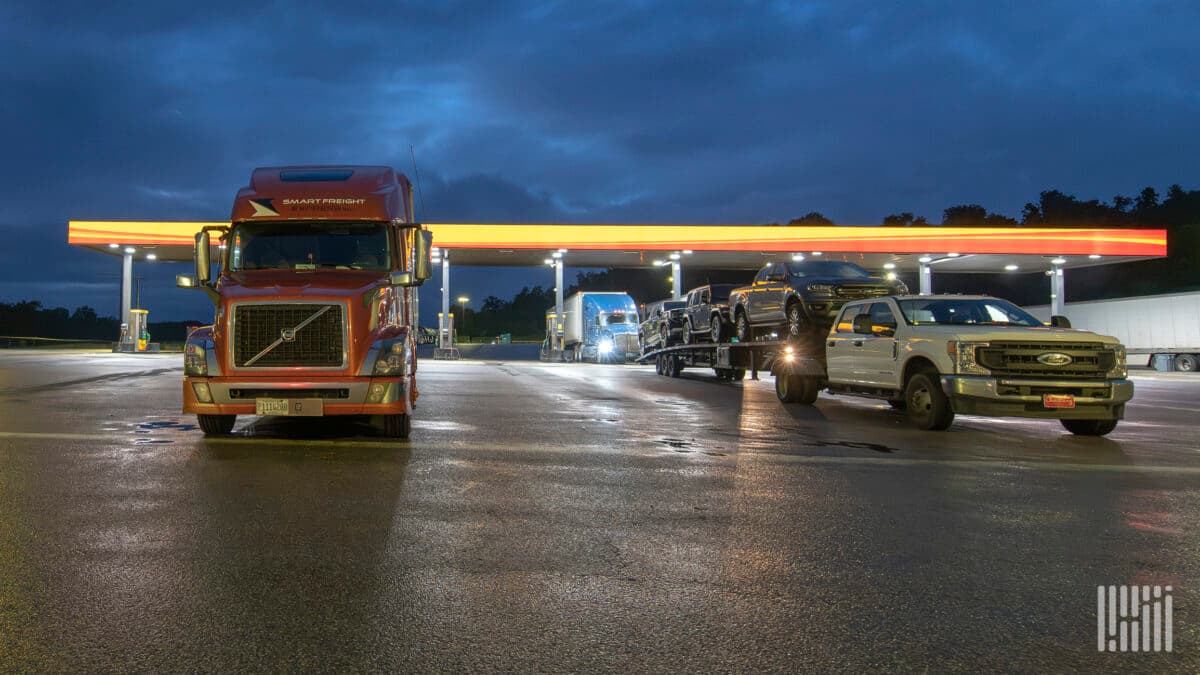
Photo via FreightWaves
The economics of freight transportation hinge on fuel efficiency, yet two drivers operating under nearly identical conditions can see dramatically different results at the pump. According to FreightWaves, owner-operators running comparable Midwest corridors with similar cargo weights and weekly mileage can experience fuel economy disparities ranging from 7.5-7.8 miles per gallon to as low as 6.1-6.3 MPG. For Dallas-based trucking companies and independent operators, this 20-plus-percent variance represents a significant opportunity to identify and eliminate operational inefficiencies.
The financial implications are substantial. When two trucks each consume approximately 400 gallons weekly, the more efficient operator achieves markedly lower fuel costs over time. For owner-operators managing tight margins, this difference compounds monthly and annually, affecting profitability and competitiveness. Dallas logistics firms managing regional and national fleets should recognize fuel economy as a controllable cost factor rather than an inevitable expense tied solely to market fuel prices.
Several factors contribute to these efficiency gaps, though the source material emphasizes that operating conditions alone don't explain the disparity. Vehicle maintenance, driver behavior, route optimization, load management, and equipment configuration all play measurable roles. For transportation companies in the North Texas region—home to major logistics hubs—implementing systematic monitoring and driver training programs can yield significant operational improvements.
As fuel costs remain volatile and pressure on freight margins intensifies, Dallas-area fleet operators would be wise to benchmark their fuel efficiency metrics against industry standards. Identifying the practices separating high-efficiency operators from their peers could unlock meaningful cost savings and operational advantages in an increasingly competitive market.