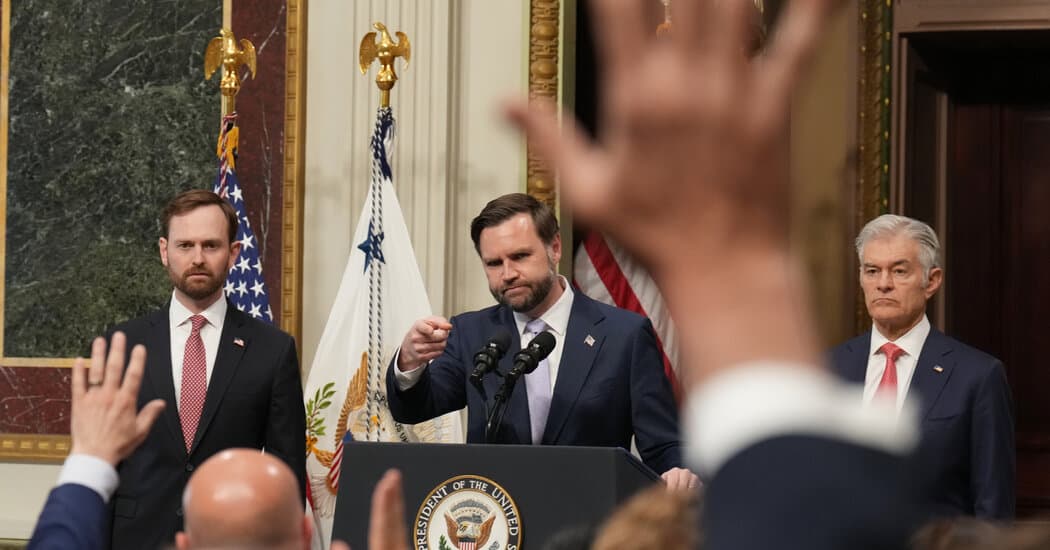
Photo via NYT Business
The Trump administration has announced plans to withhold $1.3 billion in Medicaid payments from California, citing insufficient efforts to combat fraud in the federal-state health insurance program. Vice President JD Vance indicated that the state had not implemented adequate safeguards to detect and prevent fraudulent claims, according to reporting from the New York Times. The move represents an aggressive federal enforcement posture on healthcare program integrity that could signal broader oversight of state Medicaid operations nationwide.
Texas healthcare administrators and state officials should take note of this enforcement action, as it highlights the administration's heightened focus on program accountability. Texas, which operates one of the nation's largest Medicaid programs serving millions of residents, could face similar scrutiny if federal auditors identify compliance gaps. The Lone Star State's healthcare infrastructure—including major hospital systems in Dallas, Houston, and San Antonio—depends significantly on Medicaid reimbursements, making federal payment holds a material business concern.
Medicaid fraud has long been a concern across state programs, involving everything from billing irregularities to unauthorized services. States typically implement verification systems, provider audits, and claims monitoring to minimize losses. California's designation as non-compliant by the federal government suggests its current controls may be insufficient by Washington's new standards, raising questions about what compliance benchmarks other states must meet going forward.
Healthcare industry leaders and compliance officers across Texas should monitor federal guidance on fraud prevention requirements closely. Any payment withholding could cascade through the healthcare economy, affecting hospital operating budgets, physician reimbursement cycles, and insurance provider relationships. Legal and financial experts recommend that Texas healthcare organizations conduct internal audits of their Medicaid billing practices and strengthen fraud detection measures to avoid similar federal action.