Photo via Fast Company
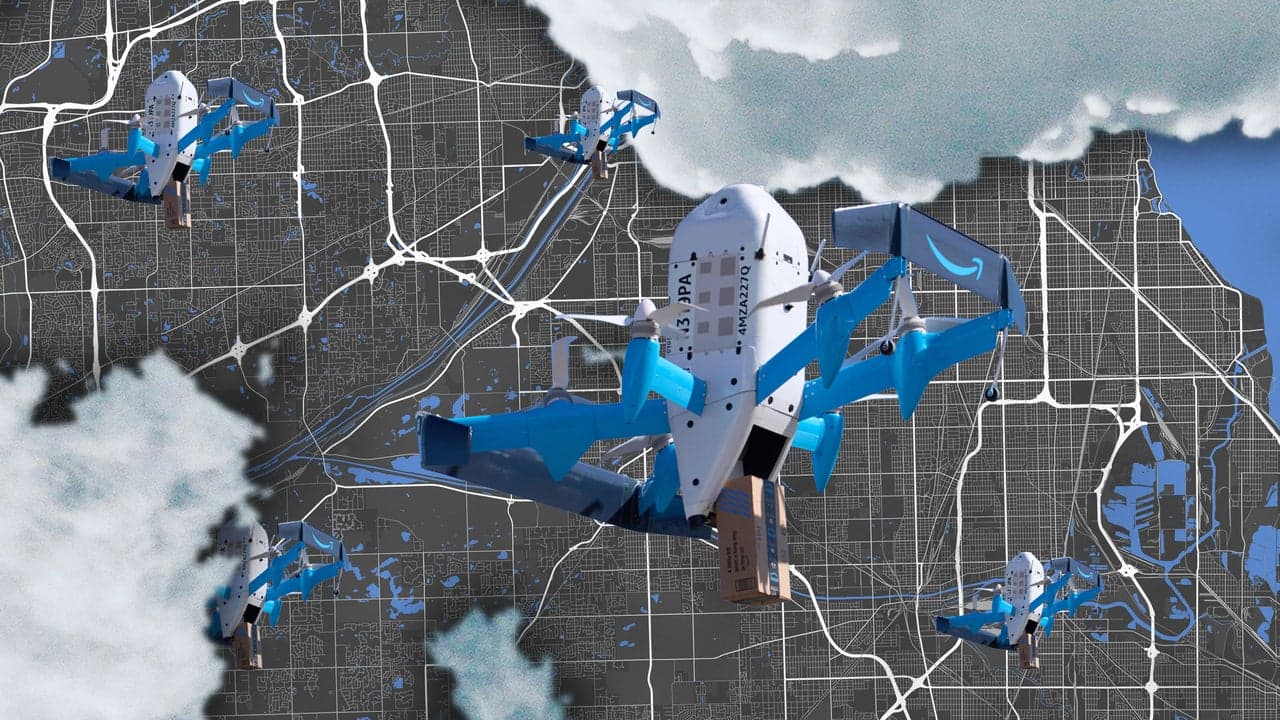
Amazon is pushing forward with its ambitious Prime Air drone delivery program, targeting 500 million packages annually within the decade. According to Fast Company, the retail giant plans to expand operations from eight current U.S. test cities to twelve, with Chicago's south suburbs next on the agenda for trials beginning this spring. The expansion brings delivery drones—80 to 85-pound aircraft capable of 73 mph speeds at altitudes up to 400 feet—closer to operational reality. For businesses and residents in growing logistics hubs like the Dallas-Fort Worth area, understanding these developments matters: if the Chicago pilot succeeds, similar trials could follow regionally.
Safety incidents have already surfaced, underscoring the risks of premature scale. In January 2026, an Amazon Prime Air drone crashed into an apartment building in Richardson, Texas—less than 200 miles from Dallas—ricocheting off the exterior and emitting smoke on the sidewalk below. Earlier incidents included drones colliding with cranes and power lines in other locations. While no fatalities have been reported, the trajectory is troubling: 85-pound objects falling from 400 feet generate significant force, and as the number of drones multiplies across vendors, accident likelihood increases proportionally.
The regulatory framework governing these operations remains underdeveloped. The FAA's Office of Advanced Aviation Technologies, which oversees trials, operates with limited public transparency and has provided minimal community notification requirements. The agency's 'Innovate 2028' initiative emphasizes public understanding is critical to program success, yet specific operational details remain scarce. For Dallas-area businesses watching logistics disruption unfold, this opacity raises questions about how local airspace management, incident reporting, and liability will be handled when commercial drone traffic intensifies.
Beyond Amazon, multiple operators—including Wing, FedEx, UPS, and air taxi companies—are pursuing low-altitude drone operations. This crowded airspace will require robust air traffic management, interoperable communication systems, and clear accountability mechanisms that don't yet exist. For Dallas logistics leaders and commercial real estate professionals, the implication is clear: the skies above warehouses, distribution centers, and residential areas are about to become significantly busier, and critical infrastructure questions must be resolved before full-scale deployment begins.