Photo via Dallas Observer
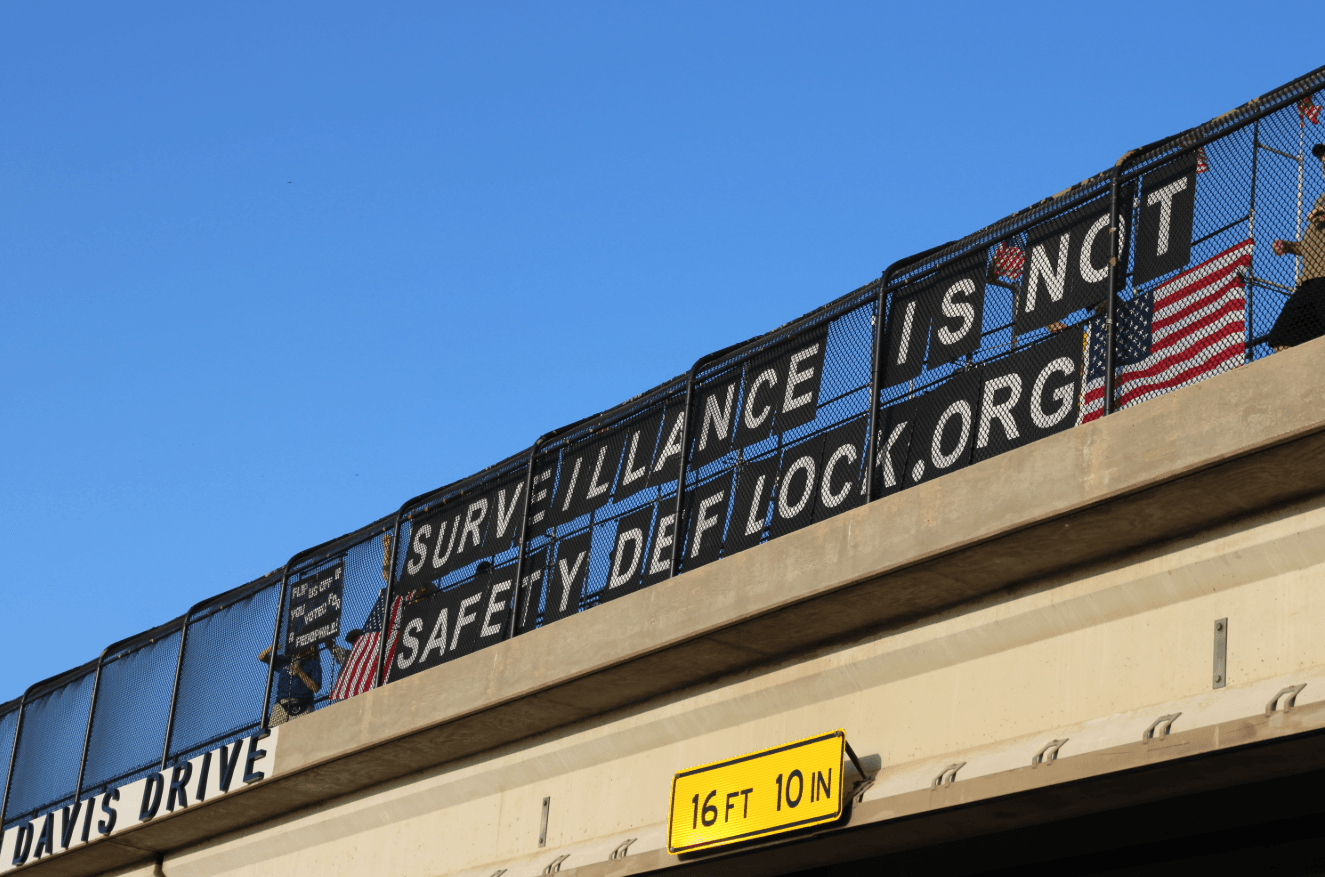
According to the Dallas Observer, activist groups in Fort Worth, Dallas, and Arlington have adopted an unconventional protest strategy by positioning themselves on highway bridges to display political messaging. This approach capitalizes on the high-traffic nature of major thoroughfares, ensuring their messages reach thousands of commuters daily. The tactic represents a shift in how advocacy organizations are utilizing infrastructure to amplify their visibility in the region's densely populated corridors.
The demonstrations have focused on opposition to Trump administration policies and broader Republican legislative initiatives, with signs addressing concerns about surveillance, civil liberties, and other political priorities. By selecting bridges as staging points, protesters gain access to audiences spanning multiple DFW municipalities—a geographic advantage that extends their reach across one of Texas's largest metropolitan areas. This strategy underscores how local activists are adapting traditional protest methods to suit the region's car-dependent infrastructure.
The bridge-based protest movement raises relevant questions for Dallas-area businesses about public space usage, commuter experiences, and the evolving landscape of civic expression in a growing metropolitan region. As these demonstrations continue, they reflect broader national political divisions while creating a distinctly local dimension of public discourse across North Texas highways and communities.