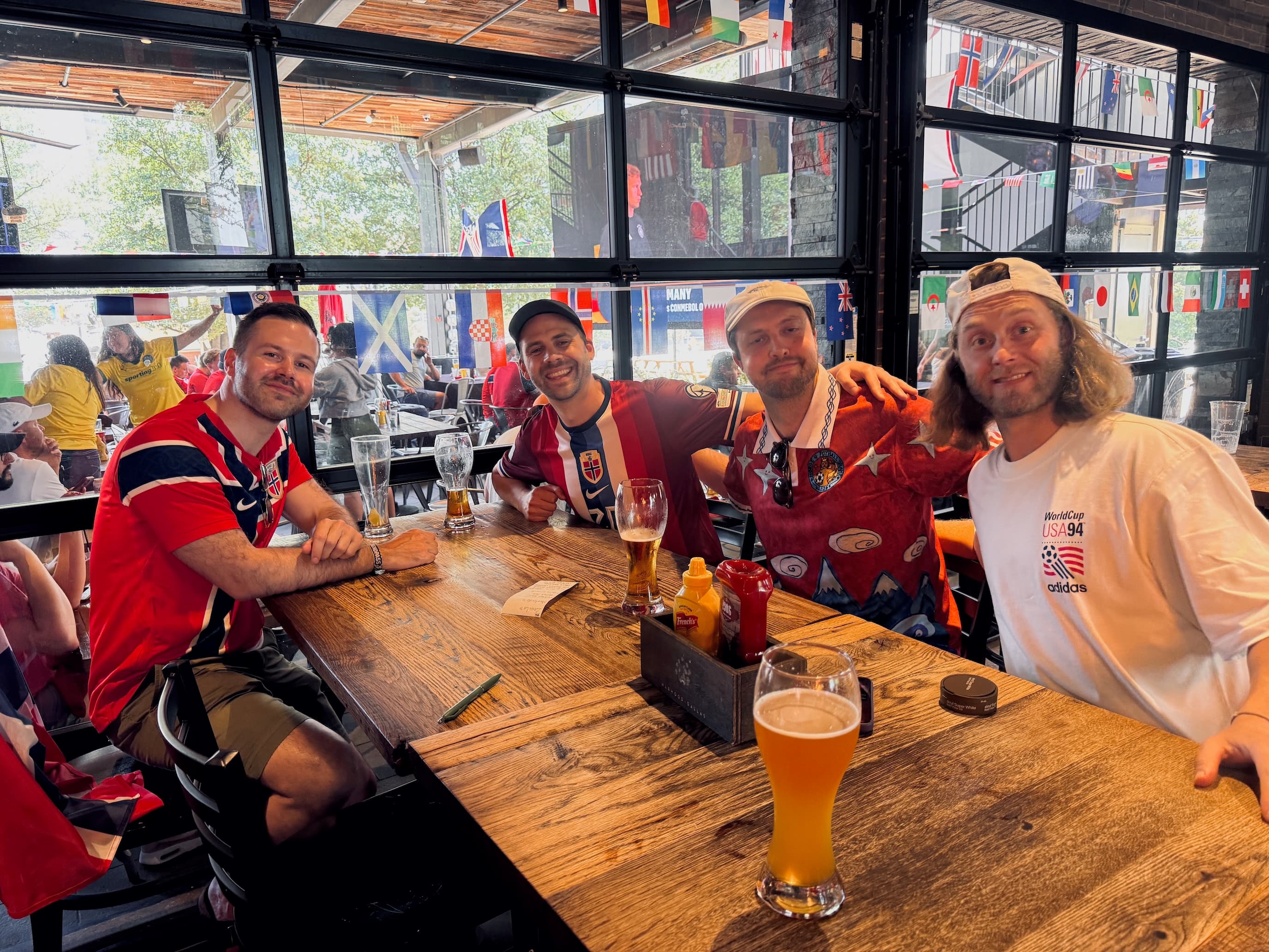
Photo via Dallas Observer
According to Dallas Observer reporting, visiting Norwegian soccer fans were struck by the significant wage disparity between service industry workers in Dallas and their home country. While Norwegian servers earn a living wage, Dallas servers typically earn the Texas minimum of $2.13 per hour plus tips. This fundamental difference in labor economics underscores a persistent challenge for the Dallas hospitality sector as it competes for talent in a tightening job market.
The wage gap reflects broader structural differences between American and European labor markets. Dallas hospitality businesses have long relied on the tipping model to bridge compensation gaps, a system that places earning stability on customer discretion rather than guaranteed wages. For a city increasingly positioning itself as a premier destination for events like World Cup matches, this model may face renewed scrutiny from international visitors accustomed to different employment standards.
As Dallas continues attracting major sporting events and international tourism, hospitality operators may need to reconsider compensation strategies to remain competitive. The conversation sparked by these visiting fans touches on a growing regional debate about whether the current wage structure adequately supports workforce retention and service quality in Dallas's growing tourism and events economy.