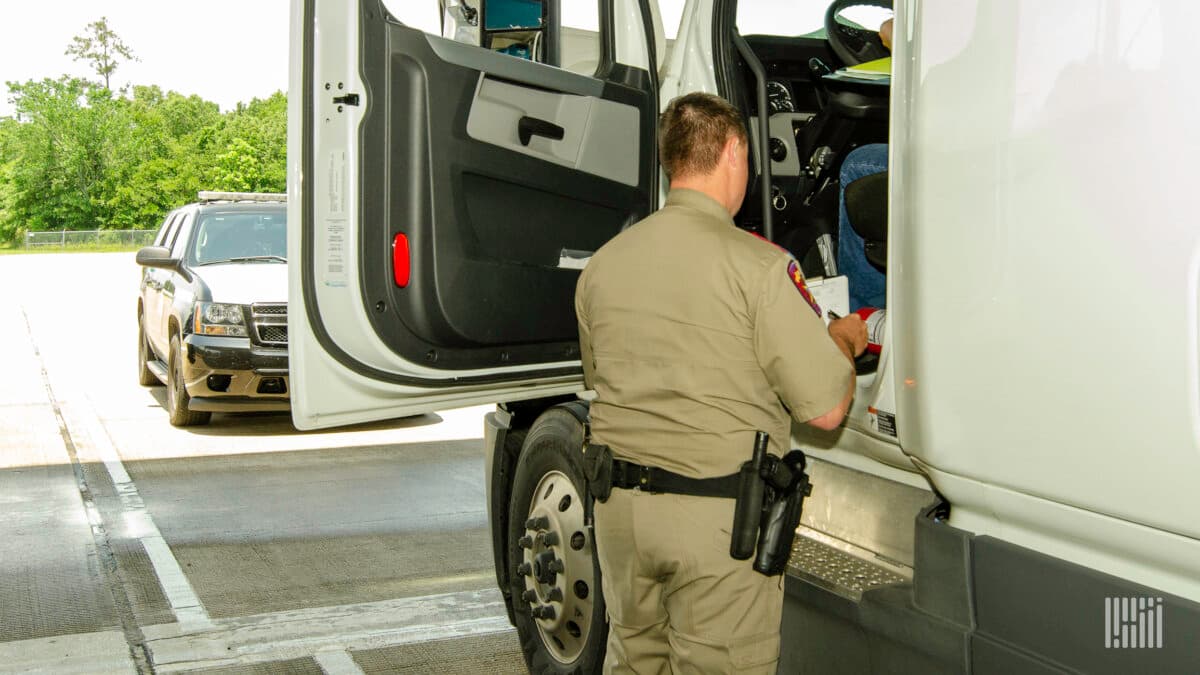
Photo via FreightWaves
A new enforcement landscape is emerging across America's highways, one that threatens to make paper logbooks and driver misstatements virtually obsolete. According to FreightWaves, law enforcement agencies now deploy sophisticated camera networks and automatic license plate readers (ALPRs) at scale houses and strategic points along major corridors—creating an irrefutable digital record of vehicle movements. For Dallas-area trucking operations that depend on Texas highways and interstate routes, this shift demands immediate attention to compliance practices.
The technology works by triangulating data points across multiple cameras and readers, allowing officers to reconstruct complete multi-state journeys with timestamps that can be cross-referenced against drivers' logbooks. A recent case illustrates the stakes: an Arizona scale house officer was able to verify a driver's actual location history against their paper logs, exposing discrepancies that would have previously gone undetected. For fleet operators in Dallas, where the trucking industry represents a significant economic segment, this capability removes the margin for error that once existed.
The implications extend beyond simple compliance violations. Fleet managers and logistics coordinators must now ensure their drivers' actual driving patterns, rest periods, and location data align perfectly with recorded logs—a challenge that requires better real-time tracking systems, driver training, and potentially investment in electronic logging devices (ELDs). Dallas-based logistics companies that have been slow to modernize their compliance infrastructure now face heightened regulatory risk.
As these enforcement technologies become more widespread across Texas and neighboring states, industry experts anticipate a fundamental shift in how trucking companies approach operations management. Those who proactively align their practices with this new enforcement reality may gain competitive advantage, while those who resist modernization could face escalating penalties. For Dallas business leaders in logistics and transportation, understanding and adapting to this enforcement evolution is no longer optional—it's essential to operational viability.