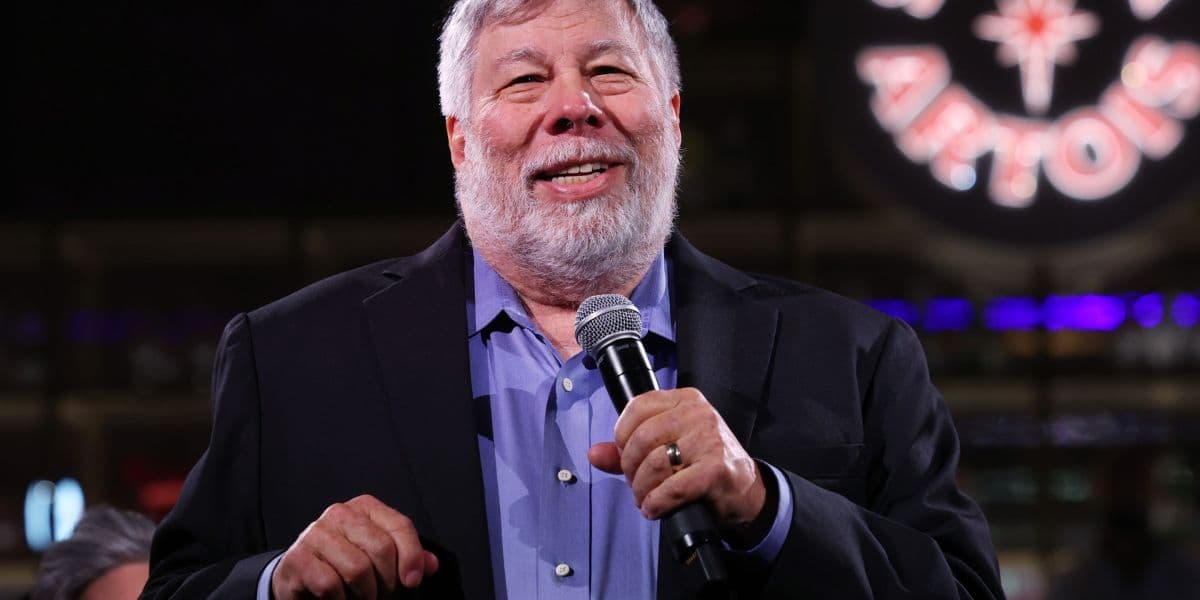
Photo via Fortune
Apple cofounder Steve Wozniak recently shared a perspective on entrepreneurship that challenges the conventional wisdom often heard in Dallas startup circles: his motivation for launching Apple wasn't financial gain, but rather the chance to build something meaningful after facing repeated setbacks. According to Fortune, Wozniak was rejected five times by HP before deciding to strike out on his own, transforming early rejection into the catalyst for one of history's most influential technology companies.
For many years following Apple's founding, Wozniak's personal compensation remained modest—just $50 per week—a stark contrast to the wealth he could have accumulated. This deliberate choice reflected his core values about entrepreneurship and the dangers of being consumed by profit motives. His approach stands in sharp relief to the venture-backed startup model that dominates today's Dallas tech scene, where funding rounds and exit valuations often dominate discussion.
Wozniak's decision to sell his stake in Apple early, despite the astronomical wealth it would later represent, was rooted in a specific concern: he feared that proximity to vast sums of money could erode the principles that made the work meaningful in the first place. In an era when Dallas entrepreneurs are increasingly focused on scaling quickly and capturing market value, Wozniak's cautionary perspective offers a different framework for thinking about success and legacy.
The cofounder's journey underscores a timeless entrepreneurial truth that remains relevant whether you're building in Silicon Valley or the Dallas-Fort Worth tech corridor: sometimes the most transformative ventures emerge not from chasing wealth, but from pursuing a vision with integrity. For Dallas business leaders considering their next move, Wozniak's story suggests that the quality of one's principles may ultimately matter more than the size of one's paycheck.