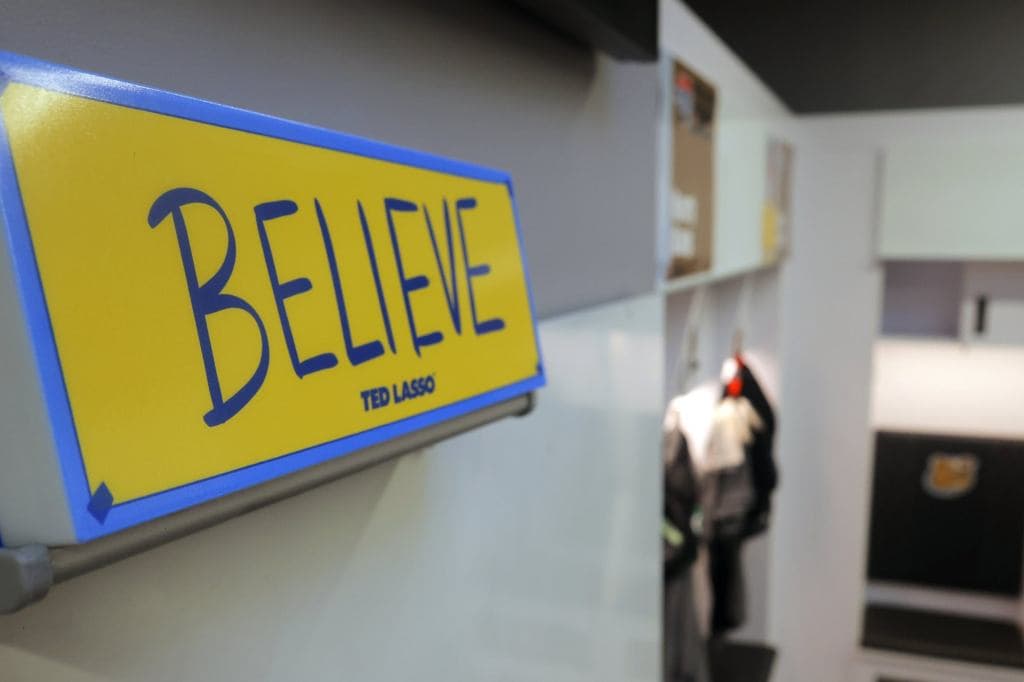
Photo via Entrepreneur
The television phenomenon Ted Lasso, returning for a new season, has become an unlikely case study in effective leadership. The show's central character—a relentlessly optimistic coach managing a dysfunctional team—demonstrates principles that resonate far beyond the fictional soccer pitch, particularly for founders and executives managing high-stakes environments. According to Entrepreneur, the series illustrates how leaders can maintain clarity and build trust even when circumstances seem dire.
For Dallas-area founders operating in competitive markets, the show's core message is simple yet powerful: belief in your team precedes belief in your vision. Ted Lasso's approach prioritizes understanding individual motivations and removing obstacles rather than commanding compliance. This contrasts sharply with the command-and-control mentality that still dominates some traditional Dallas businesses. Leaders who adopt a similar philosophy often see improved retention, stronger team cohesion, and better decision-making during crises.
The practical application centers on three pillars: clarity of purpose, transparency in communication, and consistent follow-through. Leaders who excel at all three tend to navigate disruption more effectively. Dallas tech startups and scaling companies have increasingly adopted these practices, recognizing that in competitive talent markets, founder credibility and emotional intelligence directly impact recruitment and retention. The show illustrates that these traits aren't soft skills—they're strategic assets.
As Dallas businesses continue adapting to post-pandemic uncertainty and market shifts, Lasso's blueprint offers a refreshing counterpoint to anxiety-driven management. The message is clear: leading with authenticity, trust, and optimism doesn't mean ignoring hard realities. Rather, it means helping teams confront challenges together while maintaining morale and purpose. For founders struggling with pressure, that distinction could make all the difference.