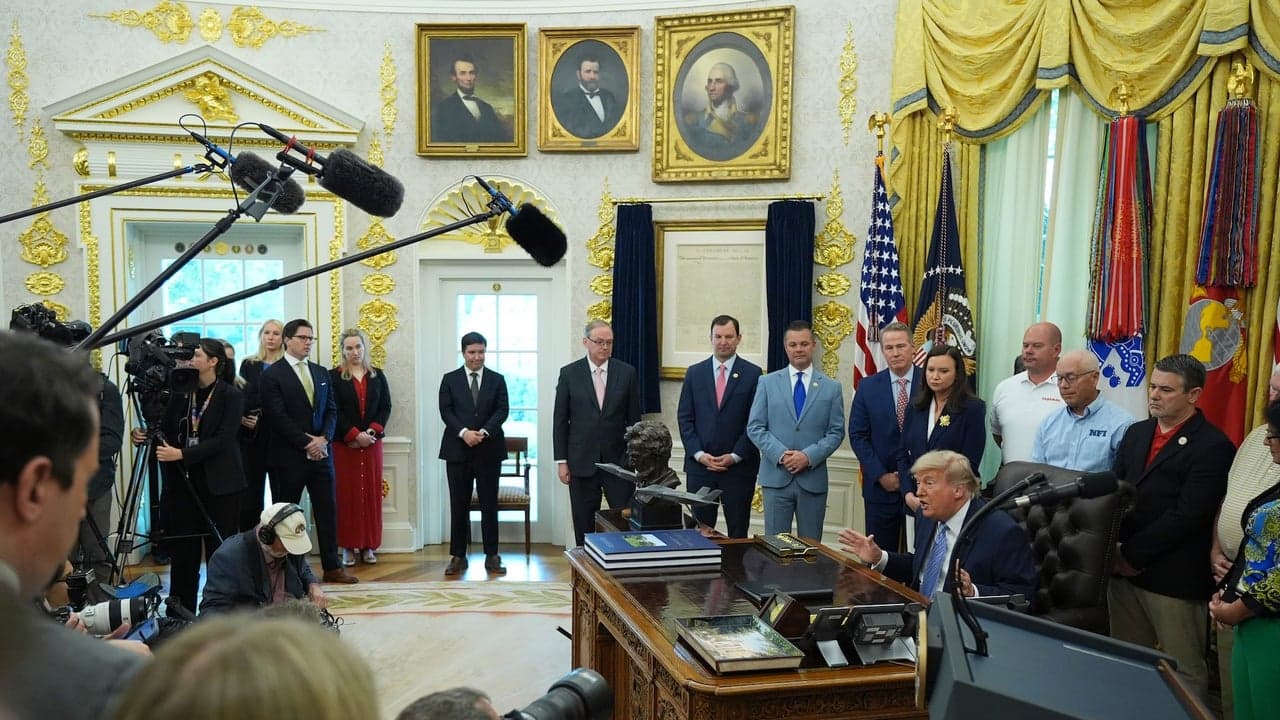
Photo via Fast Company
President Trump abruptly postponed signing an executive order on artificial intelligence, citing concerns that government oversight could undermine U.S. technological leadership. The decision came hours before a scheduled White House ceremony with tech industry executives. According to Fast Company, the proposed order would have created a voluntary framework allowing the federal government to assess national security risks posed by advanced AI systems before their public release, involving major players like Anthropic, OpenAI, and Google.
The move reflects deeper tensions within the administration over balancing innovation with security. Treasury Secretary Scott Bessent and Federal Reserve leadership convened an urgent meeting with Wall Street executives in April to address cybersecurity vulnerabilities exposed by advanced AI models. For Dallas-area banks and financial institutions, these discussions underscore the immediate risks that cutting-edge AI capabilities pose to existing software infrastructure and the need for stronger internal safeguards.
Administration officials describe their approach as collaborative rather than regulatory. Vice President JD Vance stated the government wants to foster innovation while protecting citizens from cybersecurity threats and data privacy risks. However, competing factions within the administration—some favoring tight regulation and others championing unfettered development—have created policy uncertainty. Experts warn that prolonged government scrutiny could slow AI development, but inadequate oversight carries its own risks.
The canceled order highlights a broader policy contradiction: the Trump Commerce Department already signed agreements with Google, Microsoft, and xAI for voluntary AI model evaluation, yet the announcement later vanished from the department's website. For Dallas business leaders navigating this shifting landscape, the takeaway is clear—regulatory frameworks remain unsettled, requiring companies to develop independent cybersecurity protocols and monitor federal guidance closely.