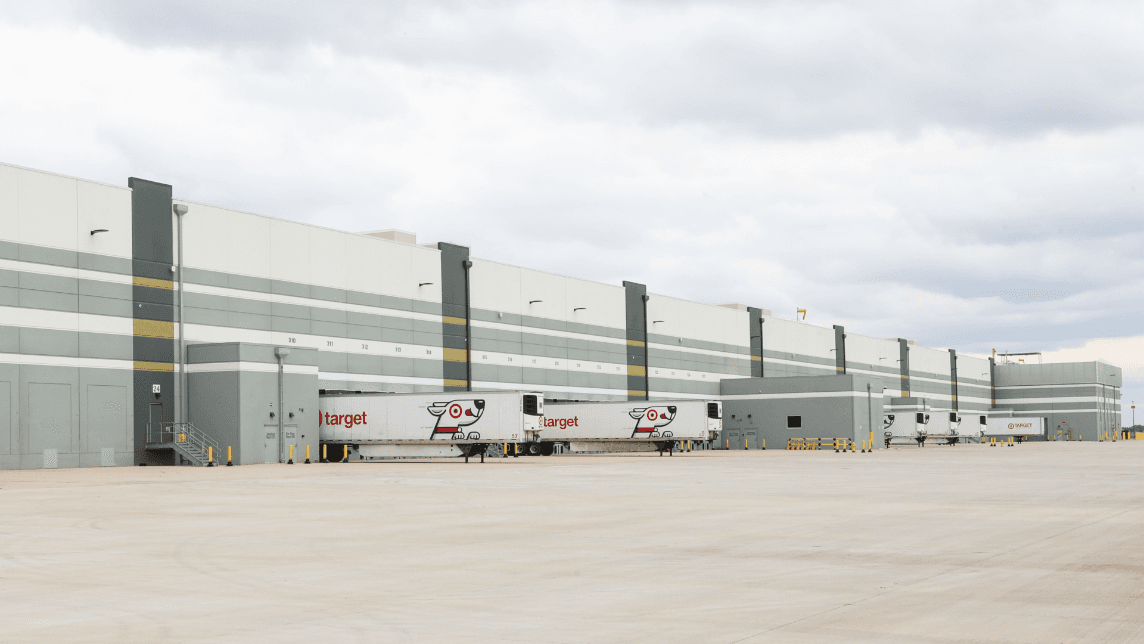
Photo via FreightWaves
Target is making a significant push to strengthen its food and grocery supply chain with the opening of a new $367 million distribution facility in Colorado. According to FreightWaves, the investment underscores the retailer's commitment to expanding fresh food selections available to customers at its store locations.
The new distribution center represents a strategic move in an increasingly competitive retail landscape where groceries have become a key traffic driver for major chains. By investing in dedicated food logistics infrastructure, Target is positioning itself to better manage inventory, reduce delivery times, and support its broader omnichannel retail strategy.
For Dallas-area retailers and logistics providers, Target's expansion signals the ongoing importance of regional distribution networks. As major retailers enhance their supply chain capabilities, local warehouse operators and transportation companies may see increased demand for specialized cold-chain logistics services.
The investment also reflects broader industry trends toward in-store food offerings as retailers seek to capture a larger share of grocery spending. This move could prompt competing retailers in Texas and beyond to evaluate their own food distribution capabilities and supply chain efficiency.