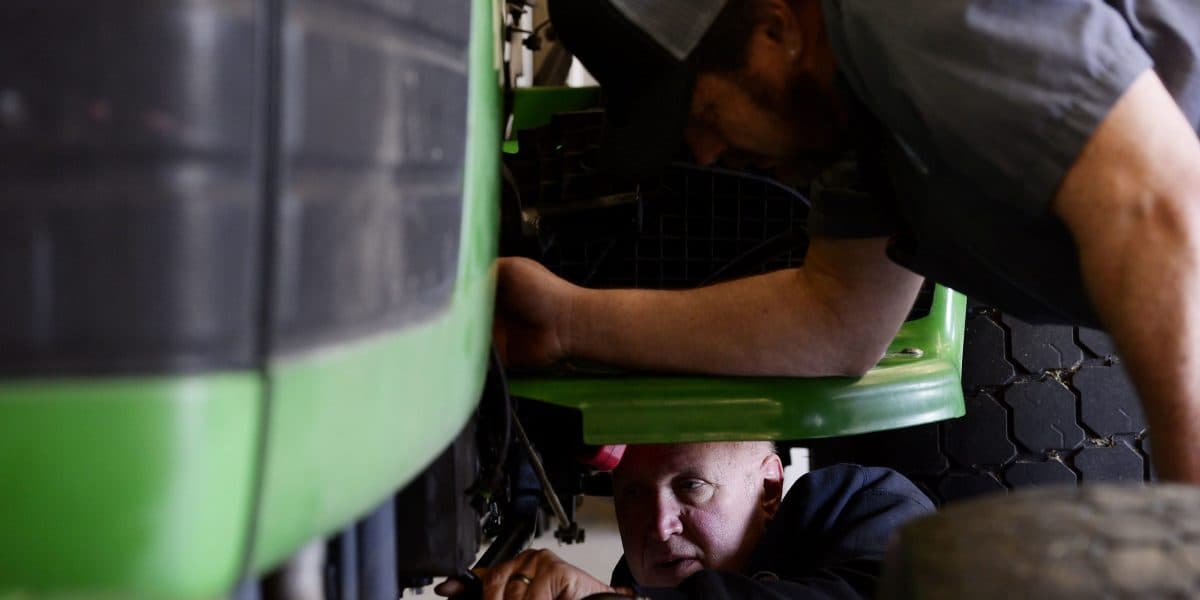
Photo via Fortune
When Congress passed the Digital Millennium Copyright Act in 1998, lawmakers were primarily focused on protecting Hollywood's intellectual property from piracy. According to Fortune, the legislation had an unintended consequence: it gave equipment manufacturers unprecedented legal authority to prevent owners from accessing and repairing their own devices—particularly farm machinery. John Deere has become the poster child for this issue, using DMCA provisions to lock farmers out of diagnostic and repair systems embedded in their tractors.
For Texas farmers and agricultural businesses, this regulatory backdrop creates a significant operational challenge. When a tractor breaks down during critical planting or harvest seasons, farmers traditionally had the option to call a local mechanic or perform repairs themselves. Today, many modern tractors require manufacturer authorization to access repair codes, forcing farmers to rely on authorized dealers—often at premium prices and with longer wait times. This dependency on single-source repair channels can devastate operations with tight timelines.
The right-to-repair movement has gained momentum among agricultural stakeholders, manufacturers, and consumer advocates who argue that ownership should include the right to maintain and fix what you buy. According to industry observers, the issue extends beyond farming to automotive, medical device, and consumer electronics sectors. Several states and the federal government have begun examining legislation that would require manufacturers to provide repair access, spare parts, and documentation to independent repair shops and consumers.
For Dallas-area businesses and the broader Texas economy—where agriculture remains a significant industry—this debate carries real implications. The outcome could reshape costs, operational flexibility, and competitive dynamics across equipment-dependent industries. Business leaders should monitor legislative developments in right-to-repair initiatives, as they could affect supply chain management, equipment procurement decisions, and long-term operational budgets across multiple sectors.