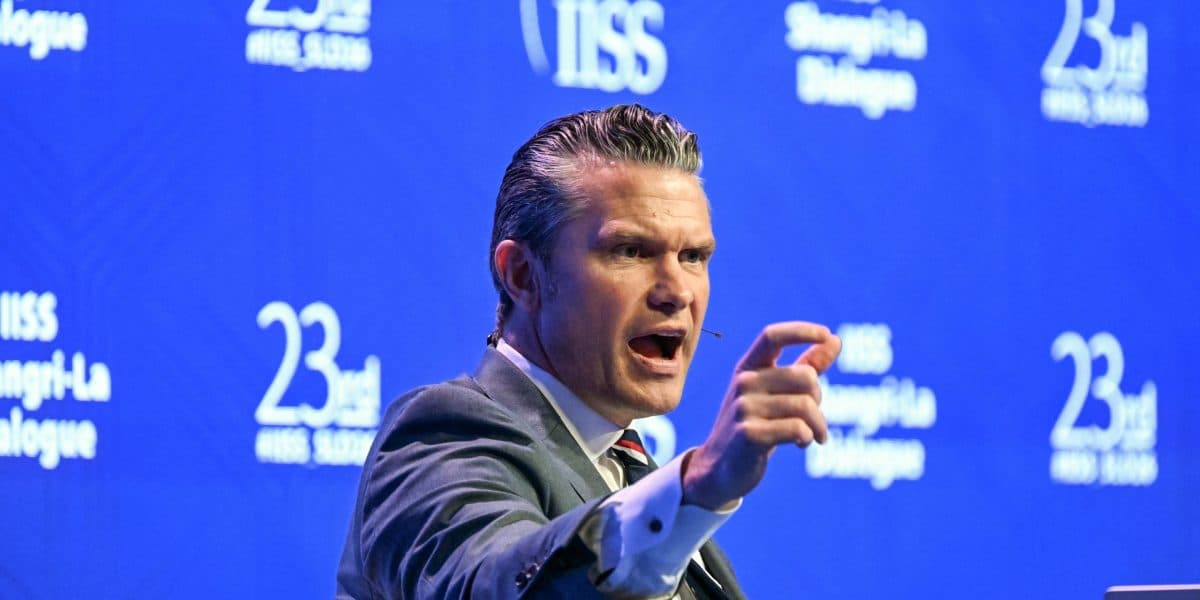
Photo via Fortune
Defense Secretary Pete Hegseth made headlines this week not for what he said, but for what he deliberately left unsaid. According to Fortune, Hegseth became the first Pentagon chief in over a decade to avoid mentioning Taiwan during remarks at the prestigious Shangri-La Dialogue, an annual gathering of defense and security leaders focused on Indo-Pacific affairs. The roughly 30-minute address represented a marked departure from recent Pentagon communication strategies in the region.
The strategic omission signals a potential recalibration of U.S. messaging toward its regional allies and China. By downplaying Taiwan in such a high-profile forum, the administration may be attempting to reduce tensions while maintaining defense commitments elsewhere in Asia. This rhetorical shift could reflect broader diplomatic negotiations happening behind closed doors, even as military postures remain unchanged.
For Dallas-area businesses with Asia-Pacific exposure—including technology firms, supply chain operators, and multinational corporations—this messaging change warrants close attention. Taiwan remains a critical hub for semiconductor manufacturing and electronics production, sectors vital to many North Texas companies' operations and supply chain resilience. Any shift in U.S. positioning toward the island could affect trade dynamics, investment flows, and geopolitical risk assessments in the region.
The Pentagon's new approach suggests the Biden administration is prioritizing diplomatic subtlety over rhetorical emphasis in managing U.S.-China relations and regional stability. Dallas business leaders should monitor how this policy evolution unfolds and what it might mean for their operations, partnerships, and supply chain strategies across the Indo-Pacific region in coming months.