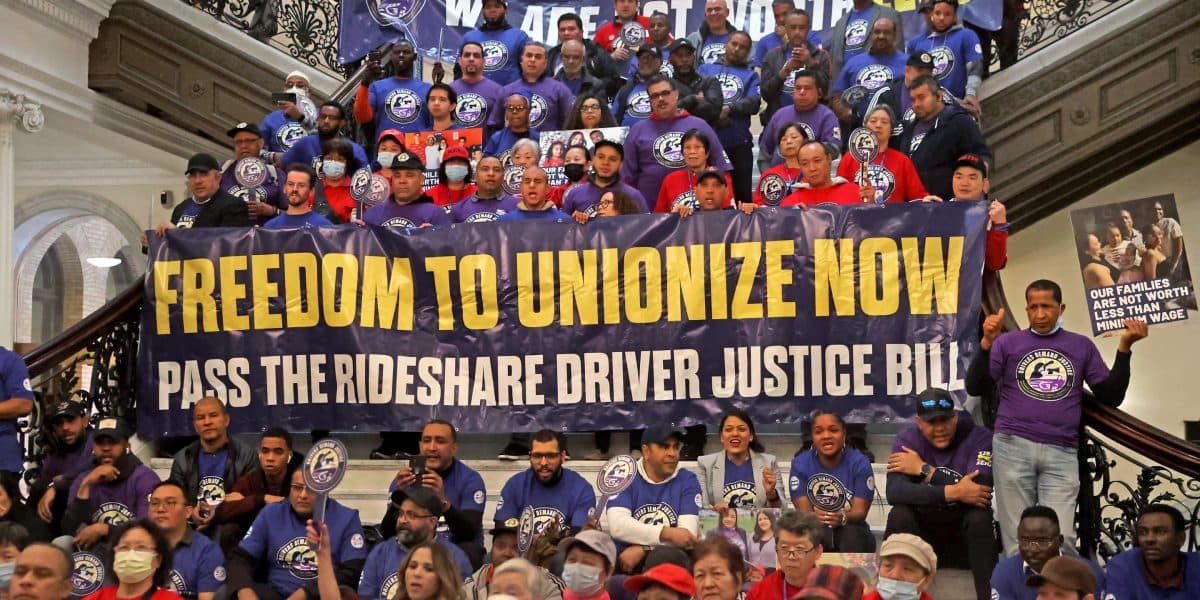
Photo via Fortune
In a significant victory for gig economy workers, Uber drivers in Massachusetts have secured union recognition, marking what observers are calling the most substantial labor win for app-based workers since 1941, according to Fortune. The agreement represents a watershed moment in the ongoing debate over worker classification and protections in the rapidly expanding rideshare and delivery sectors that have reshaped Dallas's transportation and logistics landscape over the past decade.
The deal emerged after months of organizing efforts, with drivers citing concerns about arbitrary account deactivations without appeal processes, inadequate compensation, and lack of basic protections. Drivers like Jean Fredo, who works 60-hour weeks while facing the threat of losing app access instantly, now have collective bargaining representation. This development carries particular weight for Dallas businesses and workers in the gig economy, as similar pressures exist among local rideshare and delivery drivers navigating comparable working conditions.
The timing of this labor breakthrough coincides with accelerating automation in the transportation sector, as companies invest heavily in autonomous vehicle technology. The contrast between securing worker protections and the industry's trajectory toward driverless vehicles highlights a critical tension facing gig economy workers across major metro areas, including Dallas, where tech-driven disruption continues to reshape employment structures.
Industry observers, particularly in California where similar organizing efforts are underway, are watching closely to see if Massachusetts's model becomes a blueprint for other states and cities. For Dallas business leaders and entrepreneurs operating in the gig economy, the Massachusetts precedent may signal regulatory and organizational shifts that could reshape labor relations, operational costs, and worker compensation structures in the coming years.