Photo via Fast Company
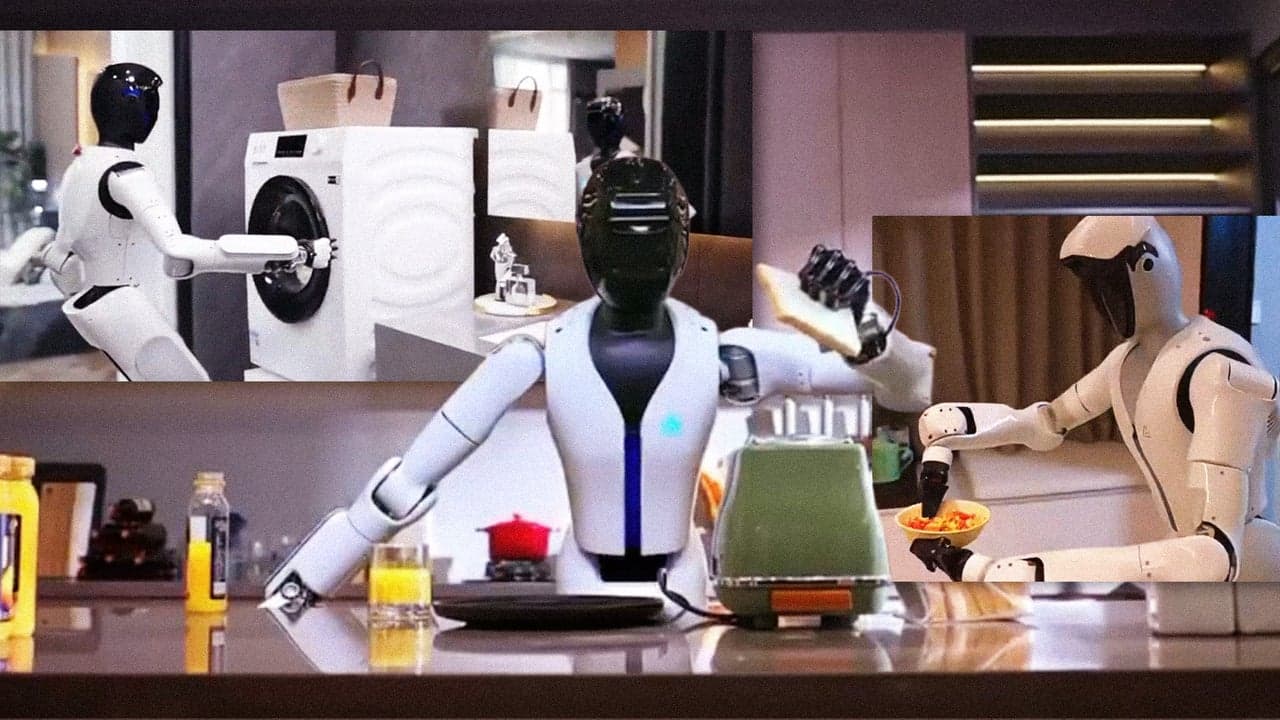
China is making aggressive moves into the home robotics market with GigaAI's SeeLight S1, a humanoid robot designed to handle household tasks from cooking to laundry. The company plans to deploy 100 pilot units this year and launch free trials in Wuhan by mid-2027, with a $15,000 price tag expected at retail launch in June 2027. This development reflects Beijing's broader strategy to deploy embodied AI across the economy—a response to demographic challenges that also signals China's commitment to dominating this emerging sector.
The opportunity is substantial. Morgan Stanley projects the humanoid robot market will reach $5 trillion by 2050, with the global household robot market already worth $41 billion and growing at 20% annually through 2027. However, experts caution that early deployments won't perform miracles. Mark Rolston, chief creative officer of argodesign and designer of Apptronik's Apollo robot based in Austin, argues that 2026-era humanoids entering homes will largely be status symbols rather than functional replacements for human labor.
The real challenge lies in navigating unpredictable home environments. Unlike factories with standardized processes, residential spaces change daily, requiring robots to process complex 3D data in real time. Chinese firms are addressing this by deploying robots into actual homes, elder care facilities, and sports arenas to gather real-world training data. Meanwhile, U.S. startups like San Francisco's Gatsby are exploring hybrid models—using remote human operators for complex tasks—rather than pursuing fully autonomous household robots.
For Dallas-area businesses, particularly those in manufacturing, logistics, and technology sectors, the robotics race matters significantly. Texas has emerging robotics talent and expertise through companies like Austin-based Apptronik, positioning the region as a potential hub for competing with China's aggressive development timeline. Whether these machines arrive in 2027 or 2028, industry leaders should monitor this space as a potential disruption to labor markets and supply chains.