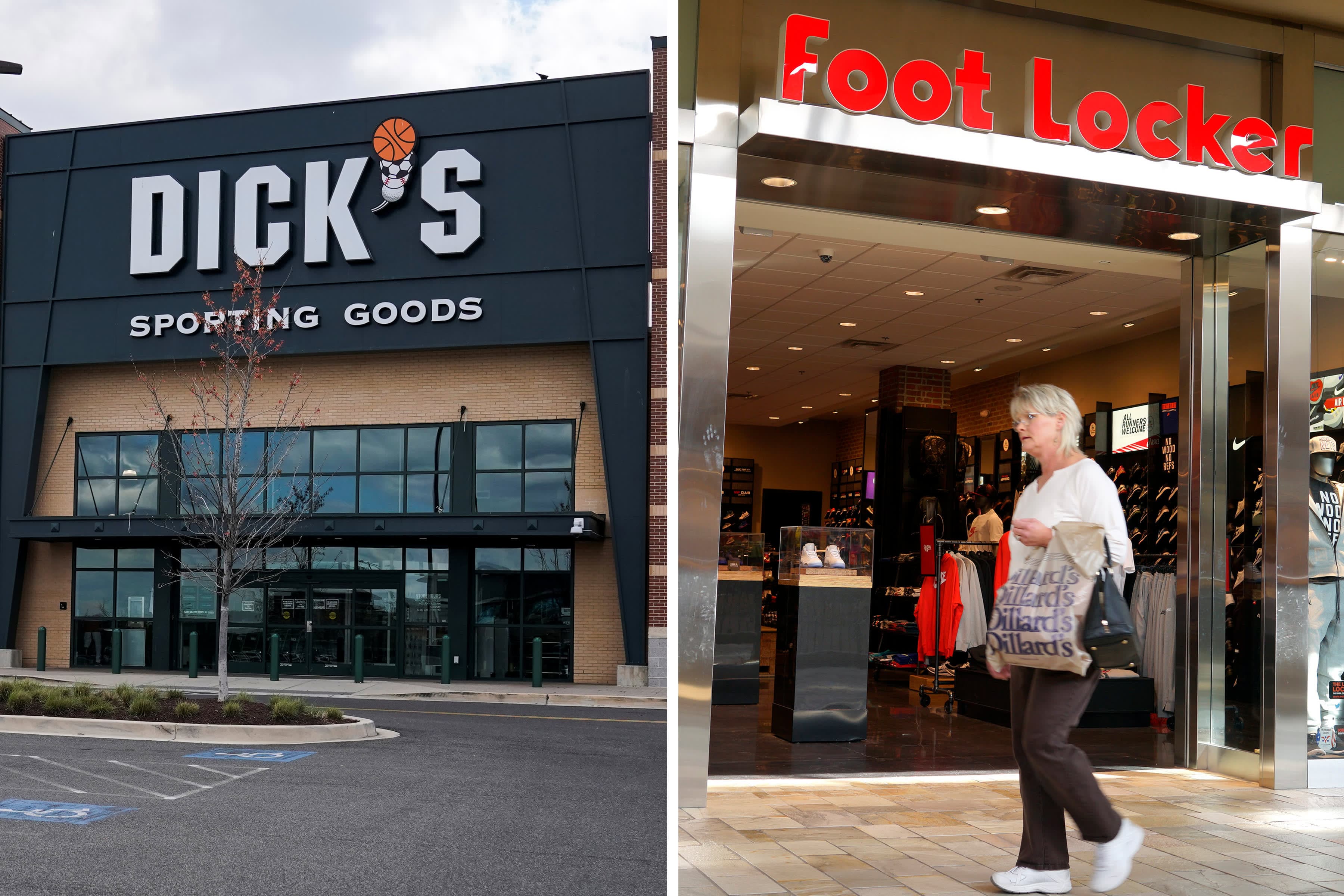
Photo via CNBC Business
Dick's Sporting Goods continues to demonstrate resilience in the competitive sporting goods retail landscape, with the Foot Locker acquisition delivering meaningful top-line expansion. However, the Pittsburgh-based retailer is grappling with the financial reality of integrating a major brand acquisition: increased operational expenses are weighing on profitability even as combined sales figures climb.
The integration of Foot Locker represents one of the retail sector's most significant recent consolidation efforts. According to CNBC Business, the company's ambitious turnaround strategy has required substantial investment in systems, staffing, and brand repositioning—costs that have directly impacted the bottom line despite strong revenue performance. For Dallas-area retail investors and business leaders, this dynamic illustrates the often-overlooked challenges of retail M&A in a sector already facing margin pressures.
The acquisition underscores a broader trend in retail consolidation, where larger players absorb smaller competitors to gain scale and market share. While Dick's Sporting Goods gains access to Foot Locker's customer base and store network, the company must balance growth aspirations with the immediate demands of operational integration. Analysts are closely monitoring whether profitability metrics will improve as integration efficiencies materialize.
For North Texas retailers and business stakeholders, this case study offers valuable lessons about acquisition strategy in brick-and-mortar retail. As e-commerce and shifting consumer preferences reshape the industry, companies pursuing growth through acquisition must carefully weigh short-term margin compression against long-term competitive positioning—a calculation that will define retail success in coming quarters.