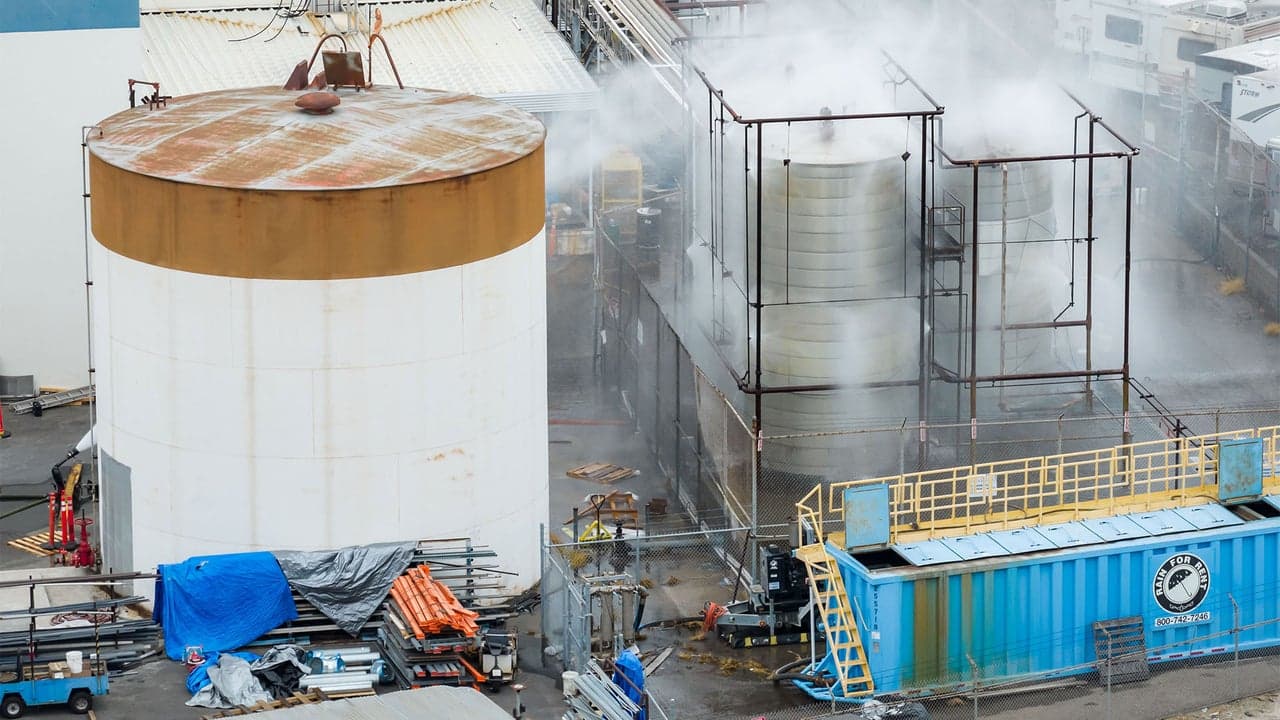
Photo via Fast Company
A damaged chemical storage tank at GKN Aerospace Transparency Systems in Garden Grove, California has triggered a massive evacuation affecting roughly 50,000 residents. The facility, which manufactures aircraft components for commercial and military applications, faced a dangerous situation when a tank holding 6,000 to 7,000 gallons of methyl methacrylate overheated Thursday and began releasing vapors. Authorities declared a state of emergency and mounted an intensive response effort involving firefighting crews, environmental monitoring, and federal support coordination.
The incident underscores critical vulnerability points in industrial chemical storage and handling. According to engineering experts cited in reports on the situation, methyl methacrylate—a chemical used to produce plastic components—becomes increasingly volatile when heated, converting from liquid to gas and building dangerous pressure. A crack discovered in the tank over the weekend may have provided a pressure relief mechanism, though firefighters have been carefully cooling the tank with water rather than attempting to manually release pressure, fearing potential ignition of the flammable vapors.
The situation has already triggered legal consequences for the operator. Residents filed a class-action lawsuit against GKN Aerospace, citing concerns about property value impacts and evacuation costs. The company has a recent compliance history marked by violations, having settled with California regulators in 2025 for over $900,000 related to recordkeeping, permitting, and emissions issues. These regulatory actions suggest oversight challenges that Dallas-area industrial facilities should monitor closely.
The incident parallels the 2023 East Palestine train derailment in Ohio, raising questions about how industrial emergencies are managed and monitored. Safety experts have emphasized the importance of precise air quality testing specific to released chemicals, rather than generic volatile organic compound screening. As Dallas continues developing its industrial and manufacturing sectors, stakeholders should examine whether current safety protocols and emergency response capabilities match the complexity of chemical storage operations within populated areas.