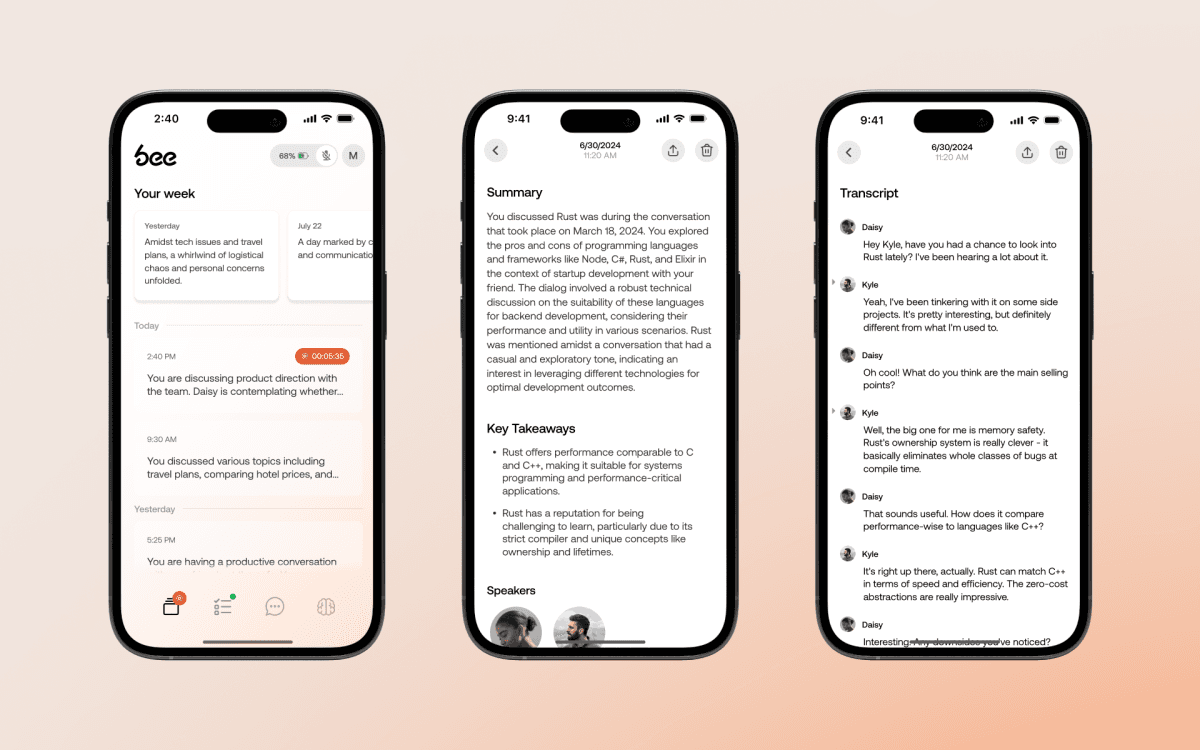
Photo via TechCrunch
Amazon has entered the competitive AI wearables market with its Bee device, a product that exemplifies the growing tension between technological convenience and data privacy. According to TechCrunch's firsthand evaluation, the device delivers on functionality promises while simultaneously triggering legitimate concerns about constant monitoring and data collection—issues that should resonate with Dallas executives managing sensitive corporate information.
The Bee wearable joins a crowded field of AI-enabled devices seeking to streamline daily tasks and boost productivity. For Dallas-area professionals and companies exploring workplace efficiency tools, the device's capabilities present a tempting value proposition. However, the convenience factor comes with a significant caveat: users must accept continuous data collection and cloud processing, raising questions about who controls that information and how it might be used.
Privacy implications extend beyond individual users to enterprises deploying wearables across their workforce. Dallas business leaders considering company-wide adoption of such technology should carefully evaluate data governance policies, compliance with Texas privacy standards, and potential liability exposure. The tension between leveraging AI's productivity gains and protecting proprietary business information remains unresolved for many organizations.
As wearable technology becomes increasingly integrated into workplace environments, Dallas companies must weigh short-term efficiency benefits against long-term privacy risks. Decision-makers should demand clear transparency from vendors about data handling practices, storage locations, and security protocols before committing organizational resources to these emerging technologies.