Photo via Fast Company
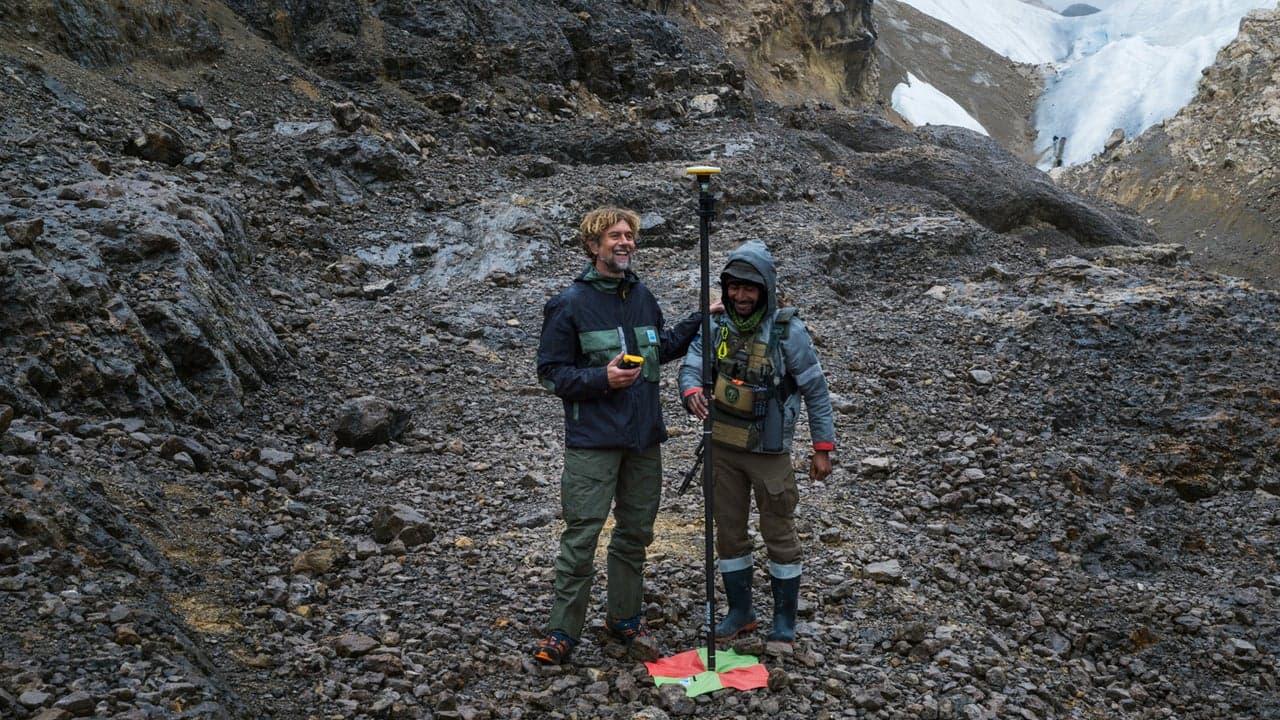
Explorer and scientist Klaus Thymann recently undertook a high-altitude expedition to Indonesia's Puncak Jaya mountain to create detailed 3D models of some of the world's last remaining tropical glaciers. Located in a remote and dangerous region of Central Papua Province, these ice formations exist at elevations high enough to maintain subfreezing temperatures despite their proximity to humid rainforests. The urgency of the mission reflects a sobering reality: according to Thymann's research, these glaciers are expected to disappear entirely within the next decade.
The scale of ice loss in the region is staggering. Between 1980 and 2024, the glacial area declined by 97 percent—shrinking from coverage roughly equivalent to twice the size of Central Park to an area smaller than Grand Central Station. Of six original glaciers in the area, four have already vanished completely. This accelerated melting mirrors broader climate change impacts on glaciers worldwide, though the tropical setting makes these ice formations particularly vulnerable and scientifically significant.
To overcome persistent cloud cover that renders satellite imagery unreliable, Thymann employed drone photography combined with geolocation software from technology company Trimble to achieve centimeter-level mapping precision. The resulting open-source 3D dataset will enable scientists to track ecosystem changes as the glaciers disappear, while simultaneously creating a permanent visual record of culturally important landmarks that local communities refer to as the 'eternity' glaciers. Thymann's nonprofit, Project Pressure, has previously applied similar documentation methods to tropical ice in South America and East Africa.
The project underscores the growing role of advanced geospatial and drone technology in environmental research and climate documentation. As organizations increasingly turn to 3D modeling and precision mapping tools to track ecological change, the techniques pioneered in remote locations like Indonesia offer templates for how businesses and researchers can work together to preserve data about our rapidly changing planet.